Review: Difficult Times Make Life Interesting
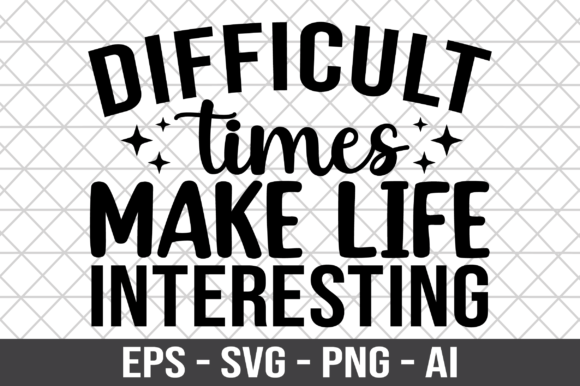
As a designer who has spent countless hours staring at digitizing software and troubleshooting thread breaks, I have learned that the best designs are not always the most complex. Sometimes, the most impactful pieces are those that speak directly to the human experience with clarity and wit. Recently, I evaluated Difficult Times Make Life Interesting, a graphic asset that caught my eye for its typographic boldness and philosophical edge. This is not just another cute phrase; it is a statement piece that demands attention.
My initial impression was one of grounded realism. The design does not rely on excessive flourishes or fragile details that might get lost in translation from screen to fabric. Instead, it presents a clean, confident layout that suggests resilience. For embroidery designers and small business owners, this kind of visual personality is gold. It fits naturally into the current trend of mindful, introspective apparel and home decor. When I first opened the files, I was looking for potential pitfalls in the vector paths, but the structure appeared solid, offering a reliable foundation for conversion into a machine embroidery design.
Real-World Application: The Custom Tote Test
To truly understand how Difficult Times Make Life Interesting performs, I moved beyond digital mockups and considered a tangible project. I envisioned this design stitched onto a heavy canvas tote bag. This is a popular item for craft businesses and Etsy sellers because it serves as both a functional accessory and a walking billboard for the wearer’s attitude.
In this scenario, the design’s layout works exceptionally well. The horizontal spread allows for a standard hoop size without requiring excessive resizing that could distort the letter spacing. On a textured canvas, the bold lines of the typography would hold up better than delicate script fonts. I imagined using a dense fill stitch for the letters to create a raised, tactile effect that contrasts nicely with the woven fabric. The result would be a handmade product that feels substantial and high-quality, appealing to customers who value durability alongside aesthetics.
Beyond tote bags, this design translates beautifully to sweatshirt embroidery. A crewneck sweatshirt provides a large, stable surface area where the text can breathe. Here, the mood shifts slightly from utilitarian to cozy and reflective. It becomes a personalized gift that resonates with anyone navigating life’s challenges. For boutique branding, this kind of messaging builds trust and relatability, showing that the brand understands the real lives of its customers.
Technical Considerations for Embroiderers
While the concept is strong, the execution requires careful planning. Since the product description indicates you receive vector files (AI, EPS, SVG) and a transparent PNG, you will need to digitize this yourself or use software capable of converting vectors to stitch files. This is a crucial step. You cannot simply print an SVG onto fabric and call it embroidery.
When digitizing Difficult Times Make Life Interesting, pay close attention to stitch density. If the letters are too thick, the fabric may pucker, especially on lighter materials like cotton t-shirts. I recommend using a combination of satin stitch for smaller elements and fill stitch for larger letter bodies, ensuring you add underlay stitches to stabilize the design. Always test the design on scrap fabric first. This allows you to check thread color contrast and adjust tension before committing to a final product.
Fabric texture plays a significant role here. On dark fabrics, ensure your thread colors have enough brightness to stand out. A navy blue thread on a black shirt will vanish, ruining the visual appeal. Conversely, on light fabrics, avoid threads that are too sheer. For stretchy fabrics like jersey knits, a cut-away stabilizer is non-negotiable to prevent distortion after washing. Curved surfaces, such as caps, require extra caution. The rigid nature of the text might not wrap smoothly around a curved brim, so this design is better suited for the front panel of a structured cap rather than a soft, unstructured beanie.
Commercial Viability and Market Fit
For commercial embroidery projects, versatility is key. This design fits seamlessly into several niches. It works for holiday embroidery gifts that offer humor instead of traditional cheer. It suits nursery decor for parents who appreciate honesty, though perhaps with softer thread colors to temper the message. It is also ideal for aprons in creative workspaces, adding a touch of personality to kitchen towels or workshop gear.
Etsy sellers and digital product sellers should note that while the graphics provided are versatile, the end-user experience depends on your digitizing skills. If you are selling finished items, the quality of the stitch-out defines your brand consistency. A clean, professional finish enhances buyer engagement and perceived value. If you are selling the digital embroidery file itself, you must ensure your digitized version is optimized for various hoop sizes and machine types.
The inclusion of AI, EPS, and SVG files means you have full control over scaling. However, remember that resizing a vector does not automatically adjust stitch density. If you scale the design down for a baby embroidery project, such as a onesie or bib, you must reduce the stitch count and simplify details to prevent bunching. Tiny lettering can become illegible if the stitches are too dense or the thread too thick. Always inspect small details closely when scaling down.
Final Verdict for Craft Entrepreneurs
Difficult Times Make Life Interesting is a robust addition to any designer’s library of Crafts and Graphics assets. It offers a mature, thoughtful aesthetic that stands out in a market saturated with overly sweet or generic phrases. Its strength lies in its adaptability across different mediums, from sturdy tote bag designs to soft baby clothes, provided the technical execution is handled with care.
Before launching this as a small shop product, confirm licensing terms. Ensure that your use of the vector files aligns with commercial rights for physical goods. Check whether the design works for both personal and commercial projects based on the seller’s policy. Use proper stabilizer, test on various fabric backgrounds, and create printable mockups to showcase the design’s potential to your audience.
Ultimately, this design invites connection. It acknowledges reality while maintaining a sense of humor and style. For makers who want to create meaningful, conversation-starting pieces, this is a worthwhile investment. Just remember: the file is only the beginning. Your skill in translating these vectors into precise, durable stitches is what will turn a simple graphic into a cherished finished product.