Review: I’m Not Arguing, Just Explaining SVG for Embroidery
As a designer who has spent countless hours digitizing and testing files for real-world production, I approach every new machine embroidery design with a critical eye. It is not enough for a graphic to look good on a screen; it must survive the needle, the thread, and the wash cycle. Recently, I evaluated the I m Not Arguing I m Just Explaining SVG to determine its viability for client projects and small business inventory. This piece explores how this specific vector asset translates from digital graphics to tangible, stitched reality.
First Impressions and Visual Personality
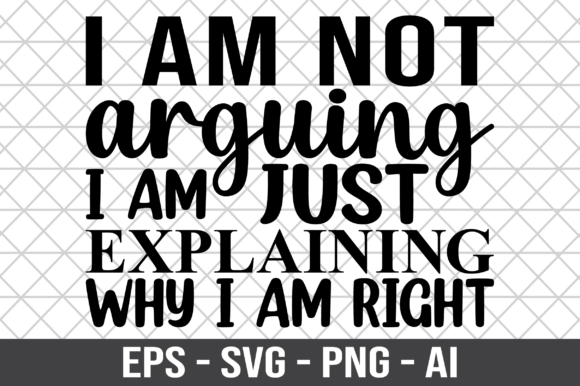
The phrase "I'm not arguing, I'm just explaining" carries a distinct mood. It is witty, slightly defensive, and undeniably relatable. Visually, the design relies heavily on typography. When I first opened the files, my immediate concern was legibility. In the world of Crafts and Graphics, text-based designs are tricky because they leave no room for error. If a letter merges or a curve becomes too tight, the message is lost.
This particular layout feels balanced. The spacing between characters appears sufficient for standard home embroidery machines, provided the correct settings are used. The visual personality is casual yet bold, making it an excellent candidate for products that aim to spark conversation. It does not try to be overly ornate, which is a strength. Simplicity often translates better to stitching than complex flourishes that can turn into thread nests.
Real-World Application: The Custom Tote Scenario
To test the practical value of this file, I imagined a common scenario for any Etsy seller or craft business owner: a custom order for a canvas tote bag. Canvas is a sturdy fabric, but it has a visible weave. I visualized placing the I m Not Arguing I m Just Explaining SVG on the front panel of a natural-colored tote.
In this context, the design works well because the statement is humorous and fits the casual utility of a tote. However, the success of the finished product depends entirely on execution. I would recommend using a dense fill stitch or a thick satin stitch border to ensure the text pops against the textured background. A thin running stitch might get lost in the weave of the canvas, reducing the professional appearance of the handmade product.
Versatility Across Product Lines
Beyond totes, this design has potential across various categories. For custom apparel, such as a unisex sweatshirt, the design could serve as a chest pocket accent or a larger back print. On a sweatshirt, the fabric is softer and more prone to stretching, so the stability of the digitizing becomes crucial. If the original SVG is converted poorly into an embroidery file, the letters may pucker the fabric.
For baby embroidery or nursery decor, the tone might need adjustment. While the phrase is funny for adults, it may not suit a baby onesie unless the parents have a very specific sense of humor. However, for a personalized gift like a teacher’s apron or a colleague’s mug rug, it is perfect. It adds personality without being offensive, striking a balance that many small shop product lines strive for.
Considerations for Challenging Surfaces
Not every surface is forgiving. If you plan to use this design on a cap, be cautious. Curved surfaces distort text. The I m Not Arguing I m Just Explaining SVG should be tested on a curved mockup first. If the text is too long, it may wrap awkwardly around the front panel of a hat. Similarly, on thin or stretchy fabrics, high stitch density can cause tearing or excessive puckering. Always use an appropriate stabilizer—cut-away for stretchy knits and tear-away for stable wovens—to support the stitches.
Dark fabrics present another challenge. If you are stitching white thread on black fabric, any gaps in the digitizing will show the background color, breaking up the letters. You must ensure the design is solid and well-covered. Conversely, on light fabrics, dark threads provide high contrast, enhancing readability.
Technical Workflow and File Utility
The product description states that you receive one AI file, one EPS file, one SVG file, and one transparent PNG file. As a reviewer, I appreciate the inclusion of vector formats like AI and EPS. These allow for infinite scaling without loss of quality, which is essential if you need to resize the design for different hoop size constraints. The SVG is particularly useful for those using cutting machines or modern digitizing software that imports vectors directly.
However, having a vector file is not the same as having a ready-to-stitch digital embroidery file. You cannot plug an SVG directly into most embroidery machines. You must use digitizing software to convert the vector paths into stitch data. This step is where the magic happens. You must define whether the letters use satin columns or fill patterns, set the underlay, and adjust the pull compensation. If you are not a digitizer, you may need to hire one or use auto-digitizing features with caution, as they often produce inefficient stitch paths.
Commercial Viability and Brand Trust
For commercial embroidery professionals, consistency is key. Using a well-structured vector base like this allows you to maintain brand consistency across different items. Whether it is a tote bag design for a local boutique or an embroidered patch for a corporate event, the clarity of the text reflects on your professionalism. Customers trust clean, crisp stitching. Sloppy text suggests a lack of attention to detail, which can harm buyer engagement and repeat business.
Before selling any finished product featuring this design, verify the licensing terms. While the file is marketed for projects, commercial rights for the underlying quote or font may vary. Always confirm that you have the right to sell items made with this design assets package. Transparency with customers about the handmade nature of the item builds trust and justifies the price point.
Final Designer Notes
My final advice for anyone using the I m Not Arguing I m Just Explaining SVG is to test extensively. Do not run the full production batch without a sample. Stitch out the design on scrap fabric identical to your final material. Check the thread colors for contrast. Inspect the small details, such as the dots on the "i"s and the curves of the "g"s. Ensure they are secure and not prone to unraveling.
Create printable mockups to visualize the scale. Compare how it looks on light versus dark backgrounds. If the design feels too dense, reduce the stitch count slightly to prevent stiffness. If it feels too sparse, add a backing or increase density. This iterative process is what separates a hobbyist from a professional apparel decorator.
In conclusion, this vector package offers a strong foundation for witty, text-based embroidery projects. Its success lies not in the file itself, but in how thoughtfully it is converted, stabilized, and stitched. With careful attention to fabric choice and stitch technique, the I m Not Arguing I m Just Explaining SVG can become a standout item in your holiday embroidery collection or year-round craft business lineup.